
📖 When Was the Old Testament Closed?
A Sacred Look at the Protestant, Catholic, and Hebrew Canons
Not all Bibles are the same.
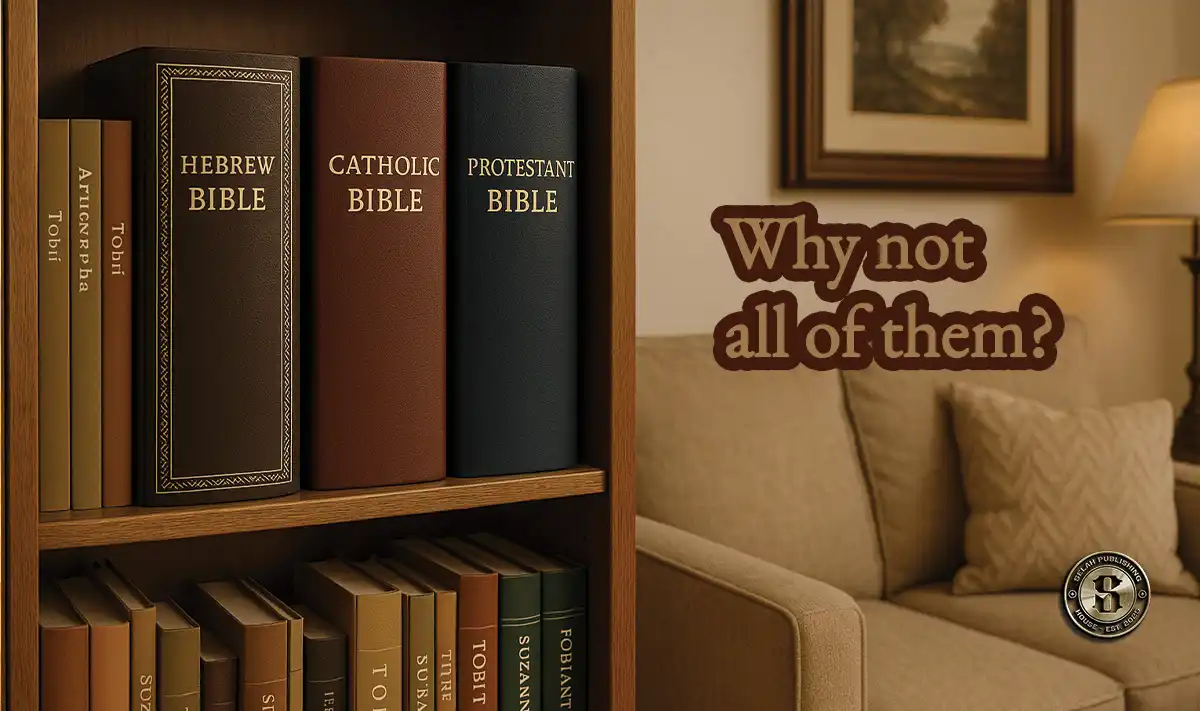
If you open a Protestant Bible, you will find thirty-nine books in the Old Testament. Open a Catholic Bible, and you will find forty-six. Turn to a Jewish Tanakh, and the number shrinks to twenty-four—but the content overlaps more than you might expect.
So how did we get here?
Who decided which books were in?
And when did the Old Testament canon become “closed”?
This is not an argument, nor a doctrinal defense. It is a quiet tracing of sacred memory. A way to understand what our ancestors preserved—and to ask, gently:
Are we letting someone else decide what we should or should not know about Elohim?
📜 Three Traditions, One Ancient Legacy
All three canons—Protestant, Catholic, and Jewish—revere the same foundational writings: the Law, the Prophets, and the Writings. But they differ in how they count, arrange, and define what belongs in the Old Testament.
Here’s a simple comparison:
Tradition | Number of OT Books | Key Differences |
Protestant | 39 | Matches the content of the Hebrew Bible, but reorganized |
Catholic | 46 | Includes 7 additional books (Deuterocanonicals) |
Hebrew | 24 | Combines books into larger scrolls (e.g., the Twelve Minor Prophets = 1 book) |
🕎 The Hebrew Canon – Closed, But Echoing
By the end of the first century CE, Jewish communities had largely settled on a sacred collection of texts now called the Tanakh:
- Torah (Law): Genesis through Deuteronomy
- Nevi’im (Prophets): Joshua through Kings, plus Isaiah, Jeremiah, Ezekiel, and the Twelve
- Ketuvim (Writings): Psalms, Proverbs, Job, and more
This canon wasn’t “voted on” in a council, but recognized through usage, reverence, and scroll tradition. By the time of Yavneh (~90 CE), these 24 books had become the spiritual backbone of Jewish identity.
✝️ The Catholic Old Testament – More Books, Longer Memory
Early Christians read the Septuagint—a Greek translation of Hebrew scripture that included additional texts like:
- Tobit, Judith
- Wisdom of Solomon
- Sirach (Ecclesiasticus)
- Baruch
- 1 and 2 Maccabees
- Additions to Daniel and Esther
These books were used in worship, quoted by church fathers, and woven into early Christian tradition. At the Council of Trent (1546), the Catholic Church affirmed them as part of the Old Testament, calling them Deuterocanonical—“second canon,” but still authoritative.
✝️ The Protestant Canon – A Return to the Hebrew Roots
During the Reformation, Martin Luther and other Protestant leaders turned back to the Hebrew canon. They honored the additional books but did not see them as binding for doctrine.
By the mid-1500s, the Evangelical Old Testament was functionally closed at 39 books—matching the content of the Hebrew Bible, but reordered into four main sections:
- Law
- History
- Wisdom
- Prophets
Early English Bibles like the Geneva and King James included the Apocrypha in a separate section. But by the 1800s, most Protestant Bibles removed them entirely.
🧭 What Do We Do With the Difference?
At Selah Publishing, we do not reject the canon. But we also do not pretend it holds every word God has ever spoken.
The Protestant Old Testament reflects a reverent attempt to return to the Jewish roots of faith. The Catholic canon reflects a reverent attempt to preserve early church tradition. And the Hebrew Bible carries the weight of ancestral memory that shaped them both.
But outside the canon are still echoes.
Still wisdom.
Still laments and longings that sound like ours.
The canon was closed. But the conversation never ended.
🕊️ Let the Question Linger
We are not here to argue what belongs.
We are here to remember what was preserved—and wonder what was left behind.
If you were never told there were more books…
If no one ever explained why they were removed…
If your understanding of scripture has been shaped by silence—
Then pause.
Ask.
And return to the questions that shaped the faith of those who walked before you.