
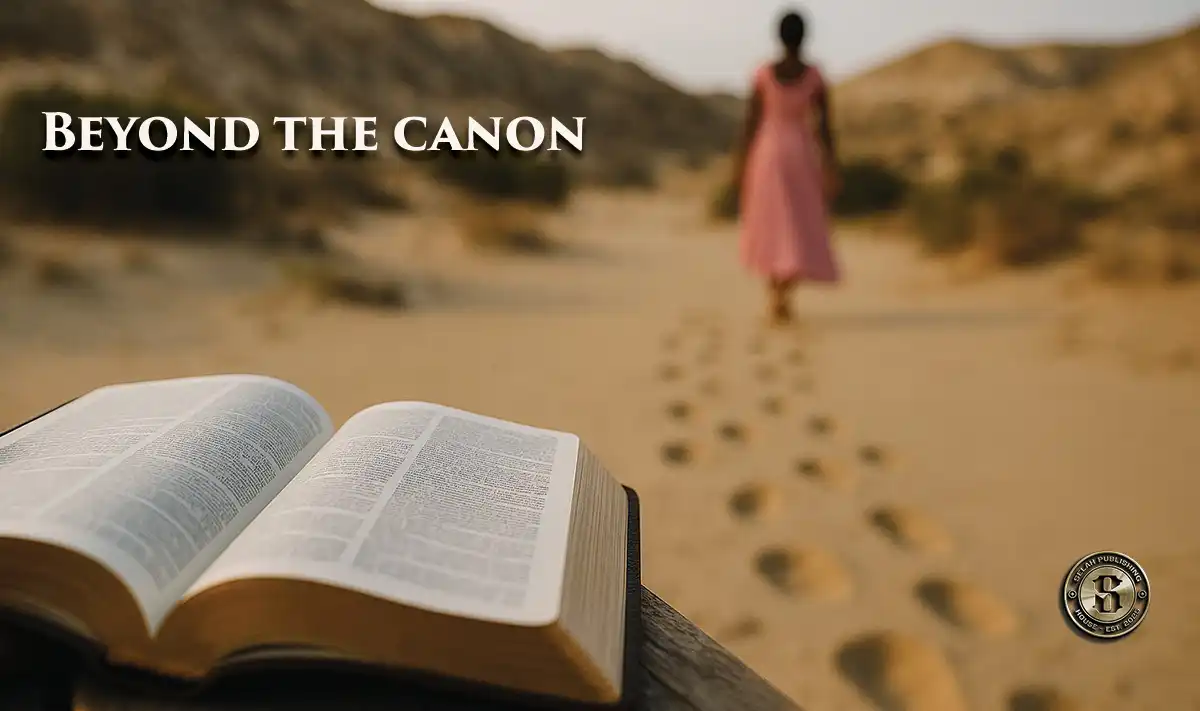
Beyond the Canon: Why Ancient Voices Still Speak
We live in a world that often defines spiritual authority by what’s officially stamped, approved, or canonized. But what if God has always spoken beyond the boundaries we draw?
At Selah Publishing, we honor the Hebrew Bible—the Old Testament—as sacred. It is the anchor. But we also believe that spiritual truth is not confined to a list of sixty-six books. Our ancestors wrote, recorded, and remembered far more than what made it into the modern canon. And many of those voices still carry wisdom for today.
We read ancient texts like the Testaments of the Twelve Patriarchs, Jubilees, 1 Enoch—not because they are equal to Scripture, but because they are echoes. They show us what faithfulness looked like in exile. What lament sounded like before the Temple fell. What questions godly men and women were asking long before Christ walked the earth.
Some ask: If it’s not Scripture, why read it?
But I ask: If you read C.S. Lewis, T.D. Jakes, Joyce Meyer, or Billy Graham—if you’ve ever been inspired by a book or a sermon or a film—then you already know the power of extra-biblical truth. We’re not replacing the Bible. We’re restoring the soundscape around it.
The Twelve Testaments are one of many ancient works we revisit. Not because they’re flawless—but because they’re close. These were the final words of the sons of Jacob—men with legacy, grief, and warning. Men who walked with Jacob. Who knew Joseph. Who lived in the long shadows of covenant and failure. Even centuries after their deaths, early scribes preserved their voices, believing we still needed to hear them.
To read these texts is to confront ourselves. To remember that the patriarchs weren’t legends. They were men. With temptation, ego, lust, violence, hope, sorrow, and blessing. They lived in the tension between prophecy and pain. Just like us.
Reading beyond the canon invites humility. It reminds us that God’s voice didn’t go silent between the prophets and the gospels. It shows us how seriously our ancestors took covenant—and how quickly people can forget it. It reveals the patterns of human nature, again and again: the longing for leadership, the danger of compromise, the cry for mercy.
We don’t treat every ancient book the same. Some are devotional. Some are poetic. Some are prophetic. Some are strange. But each one adds texture. Context. A deeper glimpse into the spiritual hunger of generations past.
And still, we tread gently.
We honor Scripture. We do not blur the line. But we refuse to close our ears to voices that came from the same soil, same language, same God-fearing legacy as those who wrote the canon.
So we read. We listen. We weigh. And we remember:
God cannot be boxed.
His Spirit has always stirred writers and wanderers.
Truth echoes farther than one binding can hold.
Let the canon stay sacred.
But let the echoes speak, too.