
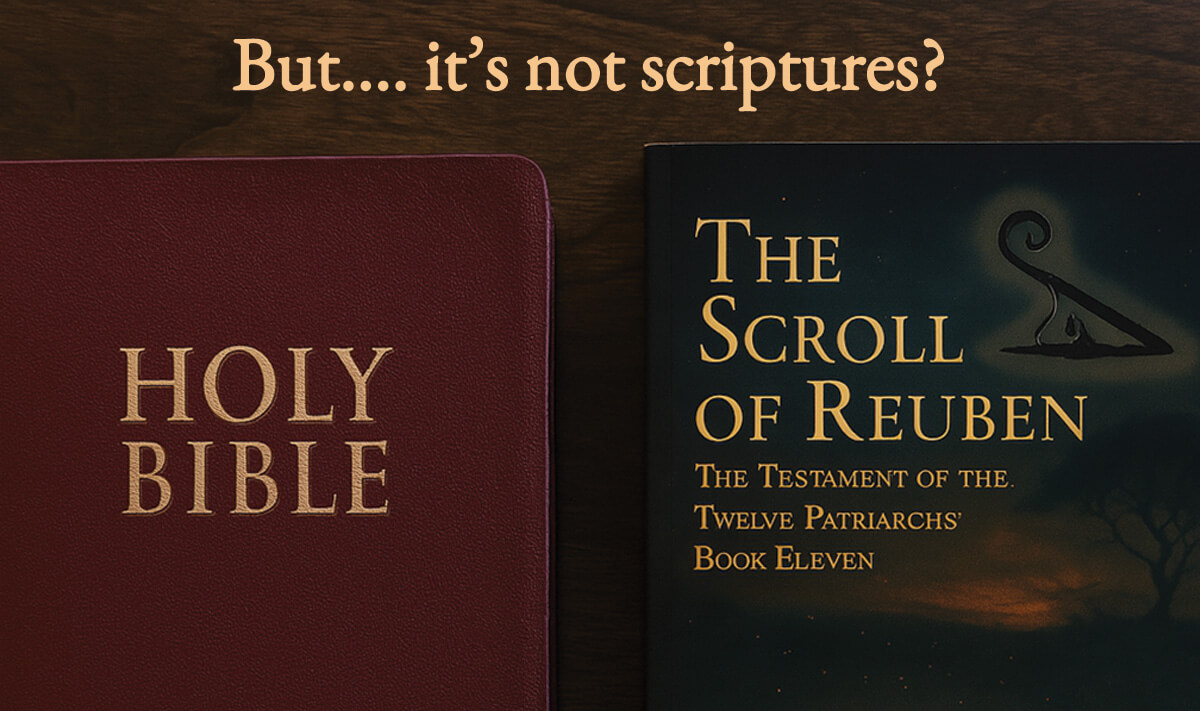
If It’s Not Scripture, Why Read It?
A Foundation Rooted in History
The Testaments of the Twelve Patriarchs are ancient Jewish texts likely written between the 2nd and 1st century BCE. Though most surviving versions are in Greek, fragments in Aramaic and Hebrew found at Qumran affirm their Jewish origin. Scholars widely agree that while the core of these writings is Jewish, later Christian editors added interpretive layers—most notably, overt references to Christ.
Even so, this composite work retains great historical and spiritual significance. R.H. Charles, a renowned scholar, observed striking similarities between the ethical teachings in the Testaments and those found in the letters of Paul and the Gospels. The echoes are unmistakable.
These were not casual writings. They were the last words of fathers to sons—half prophecy, half confession—meant to preserve legacy.
Why Selah Publishing Offers Them Now
Rediscover the Authentic Voice
We republish this text not as Scripture, but as sacred literature—an insight into early Jewish thought on ethics, covenant, temptation, and the promise of restoration. It reminds us what hope looked like before the canon closed. It shows us what longing sounded like before Messiah came.
A Tool for Reflection, Not Replacement
These writings are not canon. But they are rich in faith. They do not add to the Bible, but they remind us how seriously Israel’s early voices took repentance, self-control, and generational blessing. In these pages, we meet flawed patriarchs who still believed in covenant redemption.
A Distinctive Devotional Offering
- Grounded in scholarship: We clearly mark Jewish origins versus later Christian additions.
- Shaped for devotion: These are not fictionalized tales, but poetic meditations, written to be read slowly.
- True to Selah’s mission: Our version honors silence, breath, and spiritual depth. It invites you to pause.
Why It Still Matters
- A bridge between traditions: The Testaments reconnect Christian readers with Jewish heritage and pre-Messianic longing.
- For those in spiritual exile: These texts were written in diaspora, by men reflecting on failure and awaiting rescue.
- For learners and leaders: Each Testament bears moral counsel not unlike Proverbs, but more intimate—rooted in lived struggle.
A Final Word
“Each Testament reads like a final letter from a father to his children—grappling with shame, remembering dreams, offering hard-won truth. These aren’t doctrinal debates. They’re soul confessions. Read them with reverence. Pause often. Let ancient voices speak again.”
This is why we read what came before—even if it didn’t make it into the canon.
Because it still carries light.